
Turn Small Musical Ideas Into Complete Pieces
Practice shaping short motifs into melodies, chord progressions, phrases, and simple sections. ComposeLine focuses on practical decisions that help a sketch move beyond a few repeated bars.
Composition Becomes Clearer When You Develop What You Already Have




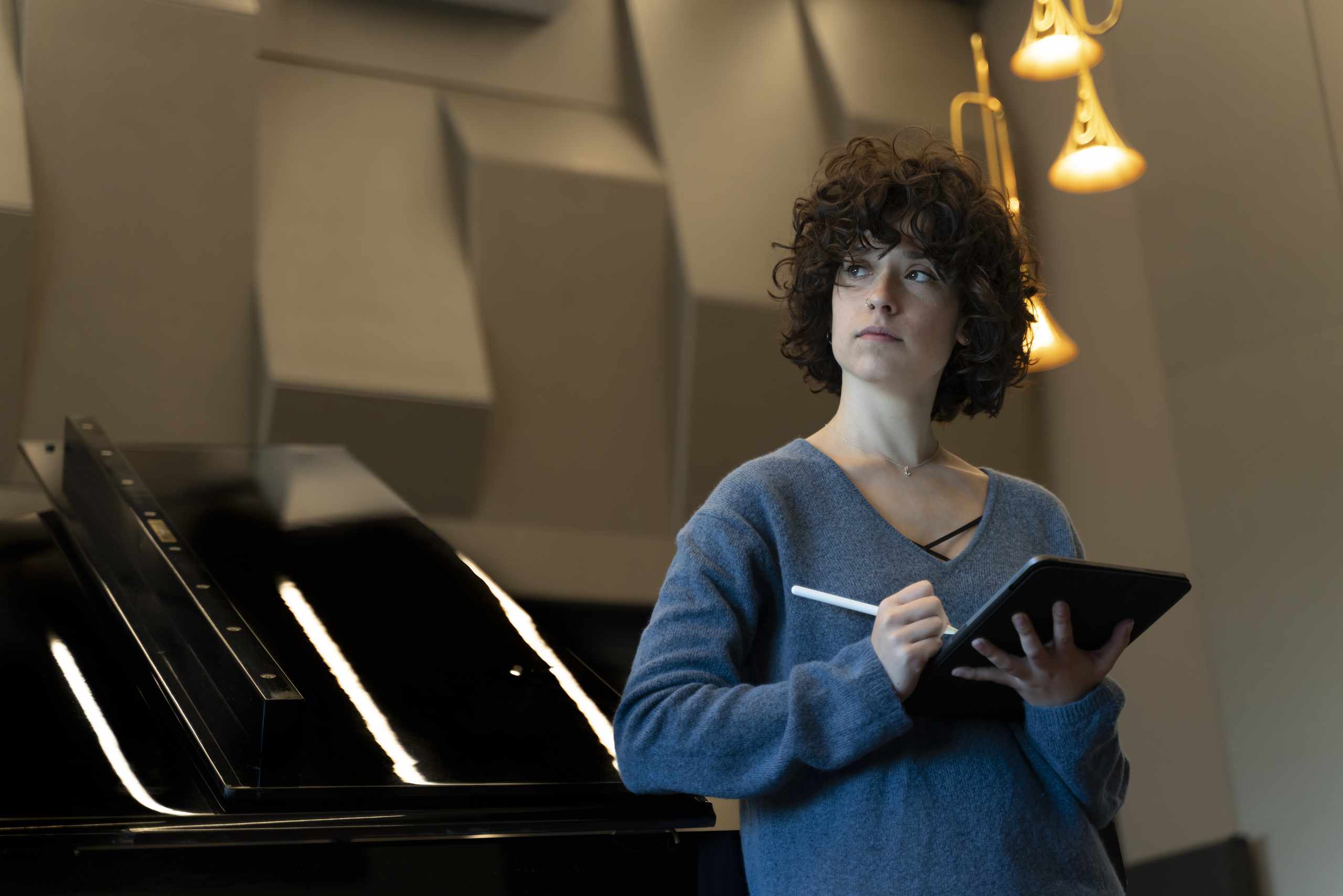

Practice the Decisions That Turn a Sketch Into Music With Shape and Direction
Develop One Motif
Take a short two- or four-bar idea and create related variations instead of replacing it immediately. Change pitch, rhythm, contour, or phrase endings while keeping enough of the original motif for the connection to remain audible.
Support It With Harmony
Test a melody over simple chord progressions and listen to how each chord changes its tension and release. Work with clear harmonic relationships before adding more complex chords that can hide what the melody actually needs.
Build Sections That Connect
Move beyond an endless loop by shaping phrases into sections with repetition, contrast, and transitions. Practice creating a second section that feels different enough to add movement while still belonging to the same composition.
“
I used to keep adding new melodies whenever a sketch felt unfinished. Working from one motif and changing its rhythm or phrase ending made it much easier to hear how a short idea could become an actual section.
Natsumi Hagiwara



WRITE, LISTEN, ADJUST
Finish More Ideas by Making Fewer Decisions at Once
A composition does not need constant new material. Limiting a sketch to a small group of notes, chords, or rhythmic patterns makes it easier to notice what the existing material can do.
Write a phrase, listen back, compare alternatives, and change one element at a time. This keeps melody, harmony, rhythm, and form easier to hear while the piece is still taking shape.
Listen Before Adding
Play a draft from beginning to end without editing. Notice where attention drops, where a transition feels abrupt, or where repetition has stopped adding anything. Sometimes the clearest revision is removing notes rather than writing more.
Give the Piece an Ending
Practice completing short forms before expanding them into larger arrangements. A clear phrase ending, cadence, return of earlier material, or final variation can help a sketch feel resolved enough to stop editing and become a finished short composition.